
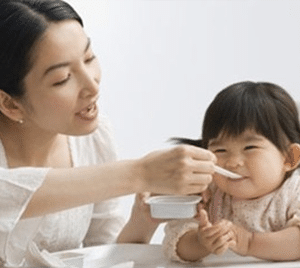
 The feeding cues will be the same as when he was younger. Your baby needs regular meals and snacks so don’t wait for him to be really hungry before you offer him food. This is why the nanny will always feed him when the time has reached. Parents can try and recognise the feeding cues and have healthy snacks to hand. Experienced nanny will also always have a bottle of water and a soft-spouted cup with her most of the time. When your baby is hungry he may also cry, he might open his mouth very wide, smack his lips together or lick his lips, especially at the sight of food. Most nannies will recommend baby-led weaning to parents. Baby-led weaning is a good method of weaning that lets a child feed herself from the very beginning. Instead of spoon feeding purees and other textures, the child is given finger foods from the outset. This is fine if your baby copes with it and enthusiastically puts her food into her mouth, and you can see that she is growing well and putting on weight. Some babies don’t put on enough weight with baby-led weaning. Maybe they are not coordinated enough or just not enthusiastic about food yet.
How do Nanny know my baby has had enough?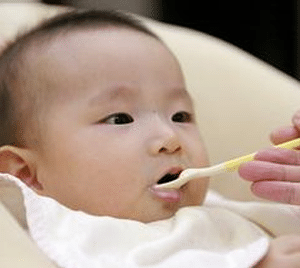
The nanny will let your baby decide when she has had enough. She knows when she is full. Babies who are full often start to show less interest in the food, start eating more slowly, or stop opening their mouths as wide. Your baby may even close her mouth and turn her head away from the spoon. Some babies cry and become unsettled. The experienced nanny will respect these signs of fullness and stop feeding.
How much should my baby eat?
Babies may not eat a lot a the beginning. Take it slowly and try to make it fun. It really depends on the baby and will vary enormously. Nanny will follow your baby’s lead and gradually build to one meal, then two, then three. As his solid-food intake goes up, nanny will then reduce the amount of milk you gave and balance it out. By the age of about a year the infant should be getting most of his calories from solid food.
What are the best foods to start with?
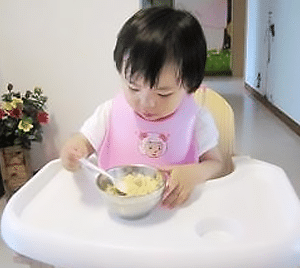
It’s fine to let your baby do some baby-led weaning if you want to, but it is advisable to use purees of single foods for young babies to start with. Parsnip, sweet potato, courgette, carrots, apples and bananas made into purees with the consistency of smooth yoghurt are ideal. You can use the water you boil them in to make the puree thinner if you want to. Baby rice is also good. Once the baby gets more confident you can start combining foods to get a healthy mix of carbohydrates, protein and dairy. Lentils are a great source of protein and iron.
Are there any foods that should not offer to baby?
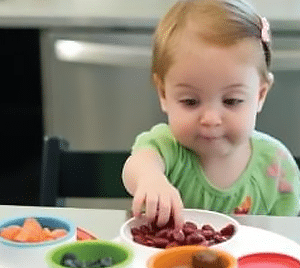 If you are starting your baby on solids before the age of six months the nanny will advise you not to offer cow’s milk or dairy products, meat or poultry (including offal), citrus fruit, fish or shellfish, eggs, soya, nut products or any foods containing gluten, as your baby’s digestive system is not mature enough to be able to process them.
Even if you start weaning at six months, it is recommended that you avoid any unpasteurised dairy products, mould-ripened cheeses, foods such as homemade mayonnaise, cake mixture or mousses that contain raw eggs, undercooked eggs and pates to reduce the risk of food poisoning. Any meat or fish should be well-cooked. Don’t add salt, sugar or honey to your baby’s food.
Should I start by offering one taste at a time?
Yes, always introduce any new food to your baby on its own just in case his system cannot tolerate it. This is especially important if you have a family history of food intolerances or allergies and you should let the nanny know. Some foods are so-called high-risk allergy foods, which means they are more likely to trigger a reaction. Examples of these foods are nuts, eggs, sesame seeds and dairy products. Having an experienced nanny can give good advice regards to feeding. Do contact NannySOS if you require any babysitting services.